The Case of the 737 MAX 8
Death by computer? … Or concealed human error?

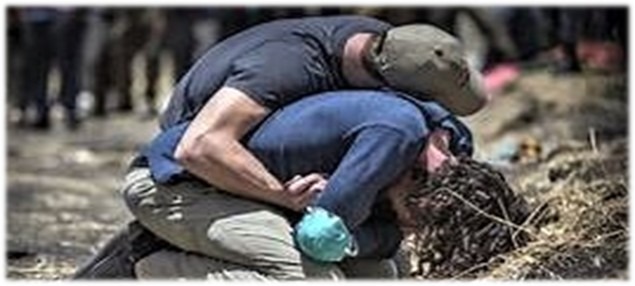
If six people were killed in my family, I would be upset. If then I was told a computer malfunction had caused their death, that might make me more than a little angry! That’s bad enough, but when it’s followed by people at the heart of the matter ignoring the facts and carrying on with business as usual, as if nothing too serious had happened, I might just want to turn around and enact some sort of retribution! Turning the other cheek is fine … up to a point.
Going back to the start of the whole cycle, it appears an upgraded computer system was designed to help a new aircraft fly more safely. But in layman’s language, it seems the system turned out to be faulty and on occasions, did not operate as anticipated. A miniscule percentage of occasions admittedly. But then, would you fly in a plane if you new the wings might fall off on 0.001% of its journeys?
Obviously, technology moves forward … or it dies! We only need to think of the wall-phone, or the floppy disc, or the iPod. Surprisingly, to the naked eye aircraft technology has changed little in 50 years; ever since the first Boeing 747 went into service in the same year as the moon landing. Passenger planes that look like stealth bombers or encrusted Star Wars monoliths, have not yet taken over the skies. Nevertheless, beneath the surface things have changed markedly: today’s Jumbo might look similar, but it is by no means the same beast that first took to the skies in 1969.
And so it was in this same tradition that Boeing developed a fourth upgrade for the 737: their very successful single-aisle, 200 seater jet, able to do long-haul if required and very popular with customer airlines. The upgraded model – the 737 MAX 8 – boasted increased power and greater capacity, whilst at the same time being more fuel-efficient: a commendable achievement in anyone’s language. Boeing accomplished this remarkable feat by altering the engine size and its position on the wings, but then had to enhance the computer system to cope with potential difficulties that might present at take-off and landing. And that is where it all seems to have gone wrong.
When two of the newly upgraded 737s crashed, a few months apart, showing extraordinarily similar symptoms that pointed to computer malfunction, most people of sound mind surmised there could be a serious problem, which should be addressed immediately, before any more lives were lost. As a direct result of these accumulated disasters Boeing’s reputation seemed in danger of being tarnished at best, decimated at worst, thus in the early stages after the second crash the company declined to even acknowledge mistakes had been made.
Boeing is a major global enterprise, which needs to show technological progress and economic growth to remain competitive in the aircraft manufacturing and distribution marketplace, alongside its main rival Airbus. In a cut-throat industry and with mind boggling sums at stake – hundreds of billions of dollars - perhaps the company’s design team was striving to achieve the impossible, the engineers holy grail, more output for less input; something we all seek but very seldom attain.
Within days of the second crash in Ethiopia - even within hours - many aviation authorities and airlines had decided the evidence was enough to ground other 737 MAX 8s around the world, or at least impose no-fly zones. Some of the pressure for this to happen had come from Facebook and other online platforms (one of those times perhaps, when we can be thankful for the positive impacts of social media).
But Boeing itself, did not join this advance guard that seriously questioned the safety of their newly designed aircraft. Incredibly, the company - that most people would think should be stepping forward with haste to at least acknowledging they had played a major part in two of the worst disasters in recent aviation history - sent a handful of investigators to the Addis Ababa crash scene, then put up the shutters and declared the plane safe to fly. That was before any findings had been published. After that there was a slow pull back from the original stance when the Boeing conglomerate - almost reluctantly – began to admit guilt; that their faulty upgrade was in some way responsible for the whole tragic affair.
Afterword
I was scheduled to fly from Mombasa to Istanbul a few months after the Ethiopian Airlines disaster. I checked on my e-ticket and sure enough, my flight was listed as using a 737 MAX 8. I phoned the local Turkish Airlines office, who advised that the MAX had been grounded until further notice. I was relieved of course, for myself and others. The airline which boasts more destinations than any of its competitors, had chosen, either of their own free will, or because of pressure from the public, to replace the MAX with other aircraft that had a track record of being less susceptible to crash-diving.
I imagined myself as a crew member, being asked to step aboard flight after flight in a 737 MAX 8, not knowing, but fearing, when the third falling-out-of-the-sky event might occur. Or as a little girl at Nairobi airport, waiting with a bunch of flowers to greet her mother … who would never arrive. By coincidence, I also watched a film that played out the scene of an airliner in rapid descent, with oxygen masks dangling and kids screaming, which made me imagine the hell that it must have been for the innocent passengers on those two planes – the first taking off from Jakarta, the second from Addis.
All this made me wonder if any of the computocrats from Boeing lay awake at night or had nightmares with similar visions. I imagined it could be so: companies were driven by hard economic facts and reasons to compete, but at their heart I hoped there still were people with softer feelings, who wished to atone for wrongs that had been done.
A COMMENT FROM THE AUTHOR: Several years on from those crashes, a total of 64 airlines have resumed flying the 737 MAX 8, after Boeing certified that it had been re-engineered and was now safe. Now frequently referred to as the 737-8 (thus avoiding the stigma of the word MAX) a number of major airlines retain the plane in their fleet, including: Southwest (300 planes) and United (80) in the US; Ryannair (200) and Turkish Airlines in Europe; Singapore Airlines and Qatar in Asia. In total, more than 2,000 variations on the Max 8 are currently in service, carrying around one million passengers per day! We can only hope that Boeing have got it right, on the second time of asking.